
Between Dreams and Wakings: Understanding Your Baby's Sleep Cycles
Baby sleep can change from one day to the next, and some sleep patterns seem just impossible to explain. Yesterday's nap lasted two hours. Today, your baby wakes after 40 minutes. Last night, they slept for hours without a sound, only to start waking again and again in the early morning.
But behind many of these seemingly random changes is something surprisingly structured: your baby's sleep cycles.
Understanding how these cycles work, and how they develop as your baby grows, can help make sense of many of the sleep patterns parents see every day.
What is a sleep cycle?
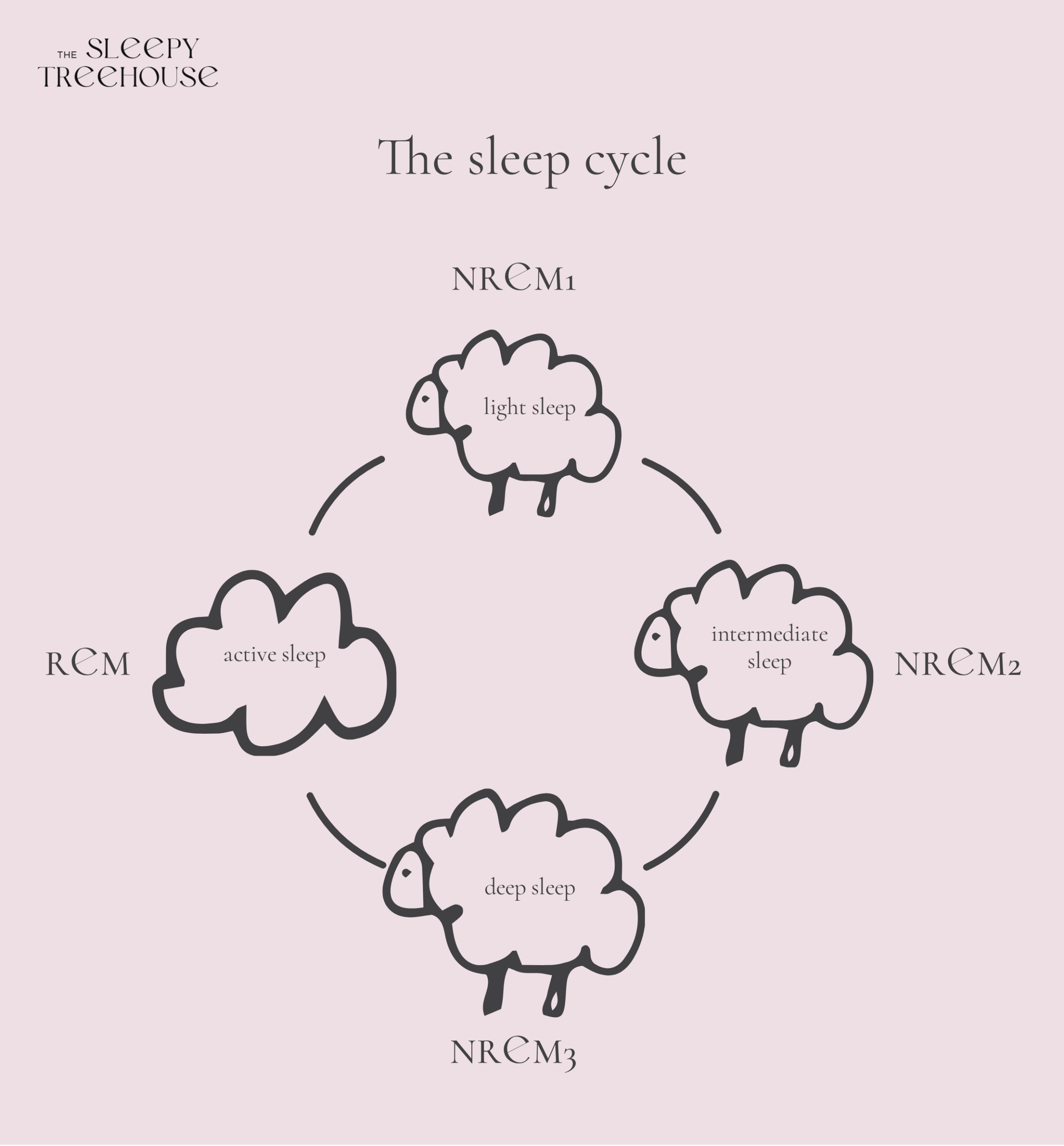
Picture a sleep cycle as a trail that winds through the different depths of sleep. Your baby drifts off, moves deeper into sleep and, towards the end, circles back towards the surface before a new cycle begins.
In babies, sleep cycles are relatively short, often lasting around 40 to 60 minutes. Which explains something many parents will instantly recognise: the 40-minute nap.
The same thing happens throughout the night. As each cycle comes to an end and sleep becomes lighter, your baby may stir, make little noises, briefly open their eyes or even wake. Sometimes they move into the next cycle almost seamlessly. Other times, they wake fully and may need help settling back to sleep.
Waking, or almost waking, between sleep cycles is completely normal. What varies is how easily your baby moves through that transition and settles into the next cycle.
Light sleep, deep sleep, REM and NREM
So, what are those different depths of sleep your baby moves through?
Sleep is made up of NREM and REM sleep, each playing a different role. NREM sleep moves progressively from lighter to deeper sleep. This is when some of the most restorative sleep happens, supporting growth, physical recovery and the immune system.
REM is the more active side of sleep. The brain is busy processing new experiences and learning, and you may notice your baby twitching, pulling little faces or making sounds while still asleep.
Babies spend a surprisingly large amount of their sleep in REM, much more than adults. As they grow, the balance between REM and NREM changes and their sleep becomes organised differently.
Why can babies wake more often in the early morning?
There is actually a reason for this. Sleep changes as the night goes on.
The first part of the night contains more deep sleep, which can make those first stretches feel longer and more settled. As morning gets closer, babies spend more time in REM and lighter stages of sleep. And because sleep is lighter, waking between cycles can happen more easily.
There is something else at play too. After several hours of sleep, sleep pressure has fallen considerably. There is simply less pressure helping your baby stay asleep, which can make settling into the next cycle a little harder.
So, if your baby gives you a lovely long stretch at the beginning of the night and then starts waking more frequently in the early hours, lighter sleep and lower sleep pressure may both be part of the reason.
What changes around 3 or 4 months?
Around 3 or 4 months, many parents notice a shift. Naps suddenly get shorter, night wakings become more frequent, and a baby who seemed to be sleeping quite well can suddenly feel like a completely different sleeper.
So, what happened?
Your baby already had sleep cycles from birth, but around this age, the way they move through sleep begins to change. Their sleep becomes more organised, with clearer transitions between different stages.
This is what is commonly known as the 4-month sleep regression. But “regression” is a slightly misleading word. Your baby hasn't forgotten how to sleep, and their sleep isn't going backwards. Quite the opposite.
Their sleep is evolving.
And while this change can make sleep feel more challenging for a while, it also helps explain why those transitions between one sleep cycle and the next suddenly become much more noticeable.
Why does understanding sleep cycles matter?
Because once you understand what is happening behind the scenes, many of those seemingly random sleep patterns start to make sense.
That 40-minute nap may simply be one complete sleep cycle. A little stir or brief waking during the night may be the transition into the next one. And those more frequent early morning wakings may happen when sleep is naturally lighter and sleep pressure is lower.
The goal isn't to stop your baby from waking between cycles. Those transitions are a normal part of sleep. What we can do is create the conditions that make it easier for your baby to settle back into sleep and move from one cycle to the next. Daytime sleep, sleep pressure, the right timing for sleep and the way your baby falls asleep can all influence how easily those transitions happen.
This is where healthy sleep foundations begin.
But that is a story for another pillow talk.
Lights out. Drams on.